Concreting quotes across Ballarat VIC 📞 0482 392 415

Concrete Driveways Ballarat

New driveways, replacements and widening from Wendouree and Alfredton through to Sebastopol, Ballarat East and Buninyong, in plain or decorative finishes. Tell us about the job and we will get you a quote from a concreter who works your part of Ballarat.

The driveway is the biggest single piece of concrete most Ballarat homes will ever have poured, and the part that decides whether it lasts happens before the truck ever arrives. Base, steel, thickness, joints and drainage falls. Get those right for the reactive clay you are on, and cure it well through the cold, and the slab does its job quietly for decades.

  • New pours & replacements
  • Plain, coloured or exposed
  • Wendouree, Sebastopol & Buninyong
  • Free, no-obligation quotes

Get a Free Quote

* Indicates required field

What Makes a Driveway Last in Ballarat

Every cracked driveway you drive past around Wendouree or Sebastopol had the same concrete in it as the good ones. The difference is almost always underneath. A driveway carries a car or two every day, sometimes a caravan or a trailer, and it sits on ground that moves with the seasons. If the base was never compacted properly, if the steel ended up on the dirt instead of inside the slab, or if nobody cut joints where the concrete wanted to crack anyway, the slab will tell you about it within a couple of winters.

Ballarat makes this harder than a flat block on stable ground. The two big local factors are the ground and the cold. Most of Ballarat and the western volcanic plains sit on heavy reactive clay and volcanic basalt, the local bluestone. That clay swells when it is wet and shrinks back when it dries out, so a driveway needs a properly built base, the right steel and control joints to cope with ground that is always moving underneath it. The new estates spreading west at Alfredton, Lucas, Delacombe and Winter Valley are almost all on this reactive clay. On top of that, this is old gold-rush country, and some older areas around Golden Point, Canadian and Bakery Hill have disturbed fill or old mine workings underground, so the ground is worth checking before a base goes in. A concreter who works your area knows what they are standing on before the first sod is turned.

The rest of this page walks through what actually goes into a driveway in Ballarat, so you can read a quote properly and ask better questions of whoever you get in.

How a Concrete Driveway Gets Built

Excavation and the base

The old surface comes out first, along with any topsoil, grass roots and soft spots. Organic material rots down and leaves voids behind, so it has to go. The crew then digs to a depth that fits the base and the slab at the finished height you want. That height matters more than people expect, because the driveway has to meet the garage floor, the vehicular crossing at the kerb and the surrounding ground without leaving a step or a dam that ponds water.

Crushed rock goes in next and gets compacted in layers rather than all in one go, because a plate compactor can only work so much depth at a time. On Ballarat's reactive clay the base often needs to be deeper and better drained so the slab is not riding directly on ground that swells and shrinks, and that is one of the honest reasons two quotes for the same square metres can land at different numbers.
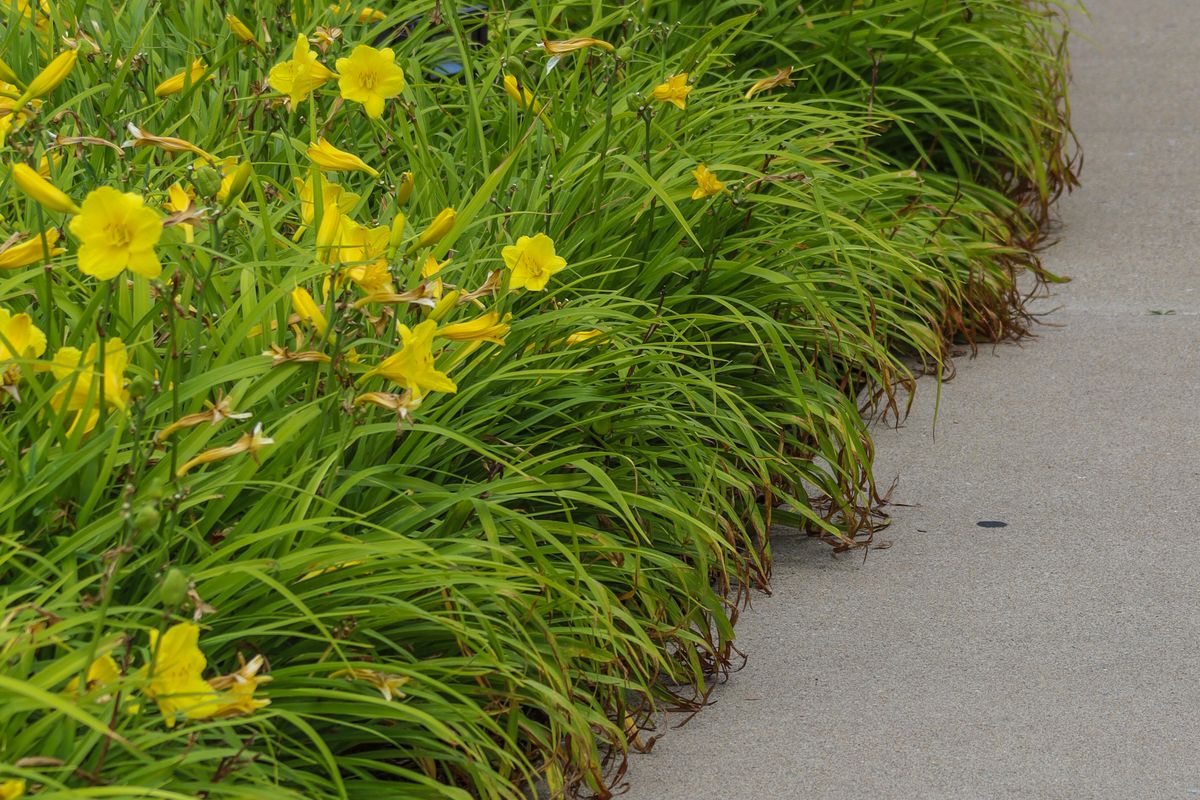
Smooth grey concrete path curving past a garden bed of yellow daylilies

Thickness, steel and reactive clay

A domestic driveway carrying cars is usually poured around 100mm thick. Where a caravan or a heavier vehicle will sit on it regularly, or where the ground underneath is poor, it gets thicker. Reinforcing mesh goes in on bar chairs so it sits up inside the slab rather than on the ground. Steel thrown on the dirt and poured over does nothing, and you cannot see the difference once the job is finished, which is exactly why it is worth asking about.

The ground matters here more than most places: Ballarat's reactive clay and bluestone soils swell and shrink through the seasons, and that movement is what cracks and lifts a driveway that was not built for it. The answer is a well-compacted base, correctly sized steel, and control joints and articulation placed so the slab can move without tearing. A concreter who works the Ballarat clay builds that in without being asked, and on the newer estates west of town it is the difference between a driveway that stays flat and one that steps within a few years.

Joints, falls and finish

Concrete shrinks slightly as it cures and it will crack somewhere. Control joints decide where. They get cut or tooled into the slab in a grid, roughly every couple of metres on a domestic driveway, deep enough to create a weak line that pulls the crack down out of sight. Timing matters. Saw cutting happens once the slab is hard enough to cut cleanly but before it has had a chance to crack on its own.

Falls are the other thing worth watching, and they matter on Ballarat's flatter blocks where water has nowhere obvious to go. The surface needs enough slope to move water away from the house and the garage rather than into them, and it has to tie in with the existing stormwater. A flat driveway holds puddles, and in a Ballarat winter that standing water freezes, which is hard on any surface. Then there is the look. Plain grey concrete is the cheapest and it does the job. Washing back the surface to expose the stone gives grip on a sloped drive and stays sure underfoot on cold, frosty mornings, which is why it is a popular choice for Ballarat driveways and paths. Coloured and stencilled finishes sit in between. All of them still need the same base underneath.

What Drives the Price of a Driveway

We do not publish rates, because a per-square-metre number on a website is close to meaningless for concreting. Two driveways of identical size on the same street can be very different jobs. These are the things that move a quote in Ballarat:

Because of all that, every driveway needs a site visit before anyone can give you a real number. Call us, describe the job, and we will get someone local out to look at it.

📞 Call for a driveway quote

Ballarat Specifics Worth Knowing

Your crossing needs City of Ballarat approval

The slab on your own land generally does not need approval, but the vehicular crossing, the strip of concrete where your driveway meets the road, is council territory. City of Ballarat has its own specification for how that crossing is built, and they want it approved before it goes in. If you are putting in a new driveway where there was not one before, or widening an existing one, sort this out early. It is the part of the job most likely to hold up a start date, and stormwater requirements can come into it on some blocks.

Reactive clay and old mining ground are different jobs

A driveway on the reactive clay of a new Lucas or Delacombe estate and a driveway on the older ground around Golden Point or Canadian are not the same build even if they are the same size. Reactive clay swells and shrinks with the seasons, so the base, the steel and the joints have to let the slab move without cracking. In the older gold-era parts of town there can be disturbed fill or old workings underground, so the ground is worth checking before the base goes in. A concreter who reads the ground correctly the first time saves you a repair later.

Steep driveways need thinking through

Plenty of blocks in the hilly east at Black Hill, Brown Hill and up toward Mount Pleasant are steep. That affects the finish, because a smooth trowelled surface on a steep drive is slippery when it is wet or frosted, which is common through a Ballarat winter. Exposed aggregate or a broomed finish gives grip. Access to the pour also changes on a steep or tight block, and whether the concrete gets pumped or barrowed feeds straight into the quote.

Curing through the Ballarat cold

You can generally walk on a new slab within a day, but keep vehicles off for around a week while it gains strength, and longer in the cold months. Your concreter will give you a firm number based on the mix, the thickness and the weather. Ballarat is one of the coldest regional cities in Australia, so concrete is never poured into frost, fresh pours are protected overnight, and curing is managed to hold strength in the slab rather than lose it to the cold. A winter pour simply takes longer to be ready.

Other Concreting We Quote On

Exposed Aggregate

Grippy, hard-wearing finishes for driveways, paths and pool surrounds. How the finish is done.

Decorative Concrete

Coloured and stencilled driveways for something beyond plain grey. Decorative options.

Resurfacing

Reuse a sound slab instead of replacing it. When resurfacing works.

Local concreters

Crews across Ballarat, including Wendouree, Sebastopol and Ballarat East.

Concrete Driveway FAQs

How thick should a concrete driveway be in Ballarat?

Around 100mm is typical for a domestic driveway carrying cars. It goes thicker where a caravan or a heavier vehicle sits on it regularly, or where the ground underneath is poor reactive clay. Thickness works together with the base and the steel, so a concreter sets all three after looking at your block rather than picking a number off a page.

Does Ballarat frost affect a new driveway?

It does. Ballarat is one of the coldest regional cities in Australia, so a driveway is never poured into frost, a fresh pour is protected from frost overnight, and curing slows through the cold months, which means keeping cars off for longer than a summer pour. An air-entrained mix and proper cover help the finished slab stand up to repeated freeze-thaw. A concreter who works Ballarat plans the pour around the forecast.

Do I need council approval for a driveway?

The slab on your own land generally does not need approval, but the vehicular crossing where the driveway meets the road does need City of Ballarat approval, and the Council has its own specification for it. Stormwater can also come into it on some blocks. Sort the crossing early, because it is the part most likely to delay a start.

How long before I can drive on it?

You can usually walk on it within a day, but keep vehicles off for around a week while it gains strength. Your concreter will confirm a specific time based on the mix, the thickness and the weather. Driving on a slab too early is one of the few ways a homeowner can genuinely damage an otherwise good driveway.

Can I pour a new driveway over the old one?

Usually not. A thin layer of new concrete over an old slab has nothing to grip and will lift and crack, and it raises your surface level at the garage and the kerb. If the existing slab is structurally sound and you just want it to look better, resurfacing with a purpose-made overlay is worth pricing. If it has dropped or has wide moving cracks, replacement is the better call.

📞 Call Now Get a Quote